
Do You Need a Welder or a Fabricator? Understanding the Difference
Welder vs fabricator explained for Mobile County — when you need a repair weld, when you need something built from scratch, and why one shop can do both.
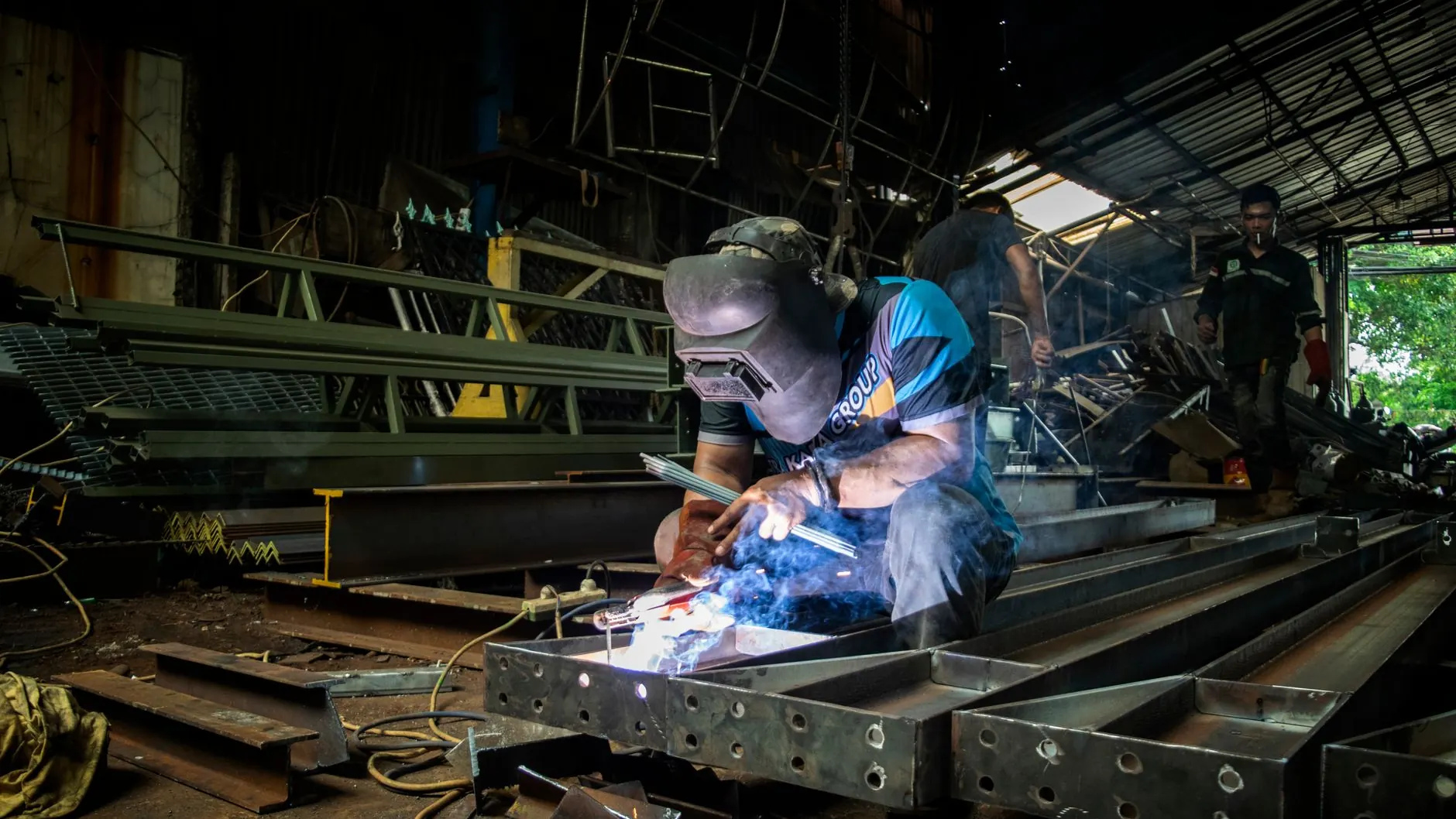
A welder joins metal — fixing cracks, reattaching broken pieces, and sealing seams — while a fabricator designs and builds new metal parts from raw stock, then welds them together. Put simply, all fabricators weld, but not everything a welder does is fabrication. If your gate hinge cracked, you need a repair weld. If you need a gate that never existed, you need fabrication. At Albert's Specialty Welding in Irvington, Rod does both, so Mobile County customers do not have to diagnose which one they need before they pick up the phone.
What exactly does a welder do?
Welding is the joining part of the job. A welder takes two pieces of metal and fuses them with heat and filler using a process suited to the material — MIG for speed and thicker steel, TIG for aluminum and stainless where the weld is visible, Stick for heavy or dirty work. The everyday welding jobs around the Hwy 90 corridor in Tillmans Corner look like this:
- A cracked trailer frame re-welded.
- A snapped fence rail rejoined.
- A loose railing tacked back solid.
- A broken bracket reattached.
That is repair welding, and it is what most people picture when they think "I need a welder." Rod brings it to you through portable welding so the repair happens where the metal lives.
What does a fabricator do that a welder doesn't?
Fabrication is the building part. A fabricator starts from flat stock, tube, and plate and creates something new: measuring, cutting, drilling, bending, shaping, and only then welding it all into a finished part. It is design plus welding. Around Mobile County that looks like:
- A custom driveway gate built to a specific opening.
- A one-off equipment bracket that was never sold in the first place.
- A stair stringer and railing sized to a porch.
- A machine guard for a shop along Rangeline Road or Schillinger Road.
The welding is one step inside a bigger process. That whole process is welding and fabrication, and it is what you need when the answer is not "fix this" but "make this."
How do I tell which one my job needs?
Here is the plain test:
- Is the part broken but basically fine otherwise? That is a repair weld — a welder's job.
- Is the part missing, discontinued, or never existed? That is fabrication — it has to be built.
- Has the part failed more than once, or was it too weak from the start? That is fabrication too — you do not want to keep re-welding an under-built piece; you want a stronger replacement.
A lot of jobs blur the line. A rusted-out gate section might get a repair weld on the good half and a fabricated new half on the bad half. That is fine — the point of using one shop is you get the honest call instead of being upsold into a rebuild you did not need. Our post on welding and fabrication and how a one-off part gets made shows what the "build new" path looks like start to finish.
Why does using one shop for both matter?
Because you should not have to be the expert. If you call a repair-only welder about a part that keeps failing, you get it welded again — and it fails again. If you call a fabricator about a simple crack, you might get quoted a full replacement. When one shop does both, the recommendation follows the metal, not the business model. In downtown Mobile, along the Airport Blvd corridor, or out in the Tillmans Corner commercial strip, Albert's looks at your actual part and tells you whether a weld or a build is the right money. It matters even more on the Gulf Coast, where salt off Mobile Bay means a weak, rust-thinned part will just keep failing until it is properly rebuilt.
You can see the range on the Tillmans Corner service area page or explore welding and fabrication in Mobile.
What processes and metals does the work actually involve?
Whether the job is a repair or a build, the same toolkit is behind it, and knowing the basics helps you talk to any welder. The three processes each have a lane:
- MIG — fast and forgiving, great for thicker steel and production-style welds. Most everyday repair welding on trailers and fences.
- TIG — slower and precise. The right call for aluminum and stainless, and for any weld that shows on a finished piece like a railing or a decorative gate.
- Stick — rugged and portable, good for heavy or dirty material and outdoor field repairs where wind would blow a MIG shield away.
The metals matter just as much. We work aluminum and cast aluminum, stainless steel and cast iron — each behaves differently under heat, and matching the process to the metal is where experience shows. A fabricator building a stainless handrail and a welder repairing a cast-iron bracket are using different settings, filler, and technique even though both are "welding." Around the Rangeline Road and Schillinger Road shops in Tillmans Corner, that range is what lets one visit handle several unrelated jobs.
Can a job be part repair and part fabrication?
All the time — and this is where the one-shop advantage really pays off. Picture a rusted driveway gate: the top half is sound, but the bottom rail has corroded through. A repair-only welder might weld the good half and send you off with a gate that fails again at the weak bottom in a year. A fabricator-minded shop cuts out the bad section and builds a new, stronger bottom rail, then welds it into the sound frame. You get a gate that is mostly repaired and partly rebuilt — the cheapest path that actually lasts. That blended call only happens when the same person can both weld and build, and when they are honest enough to recommend it. It is the same logic behind our portable welding visits: bring the full toolkit to the metal and do whatever the metal actually needs.
The same blend shows up on gates, trailers, railings, and equipment all over the county — a mostly-good piece with one failed section, where the smart fix is part weld and part rebuild. A repair-only mindset patches the symptom; a fabrication mindset asks why it failed and builds out the weak point so it does not come back. When you hire a shop that thinks both ways, you stop paying to fix the same break twice, which over a few seasons is the real savings.
Still not sure? Just describe the problem
You do not need to know the difference before you call — that is our job. Tell us whether the part is broken, missing, or needs to be stronger, and we will tell you honestly whether it is a repair weld or a fabrication job. Albert's Specialty Welding handles both, and there is no job too odd. Call Rod at (251) 753-7337 or use the contact page for a free estimate. Shop work carries a ****, we are fully portable across Mobile County, and we are open 8–5 Monday through Friday.