Welding and Fabrication: How a Replacement Part Gets Made
How a custom one-off metal part gets fabricated in Mobile County, AL — from a napkin sketch or broken original to a finished piece welded to fit.
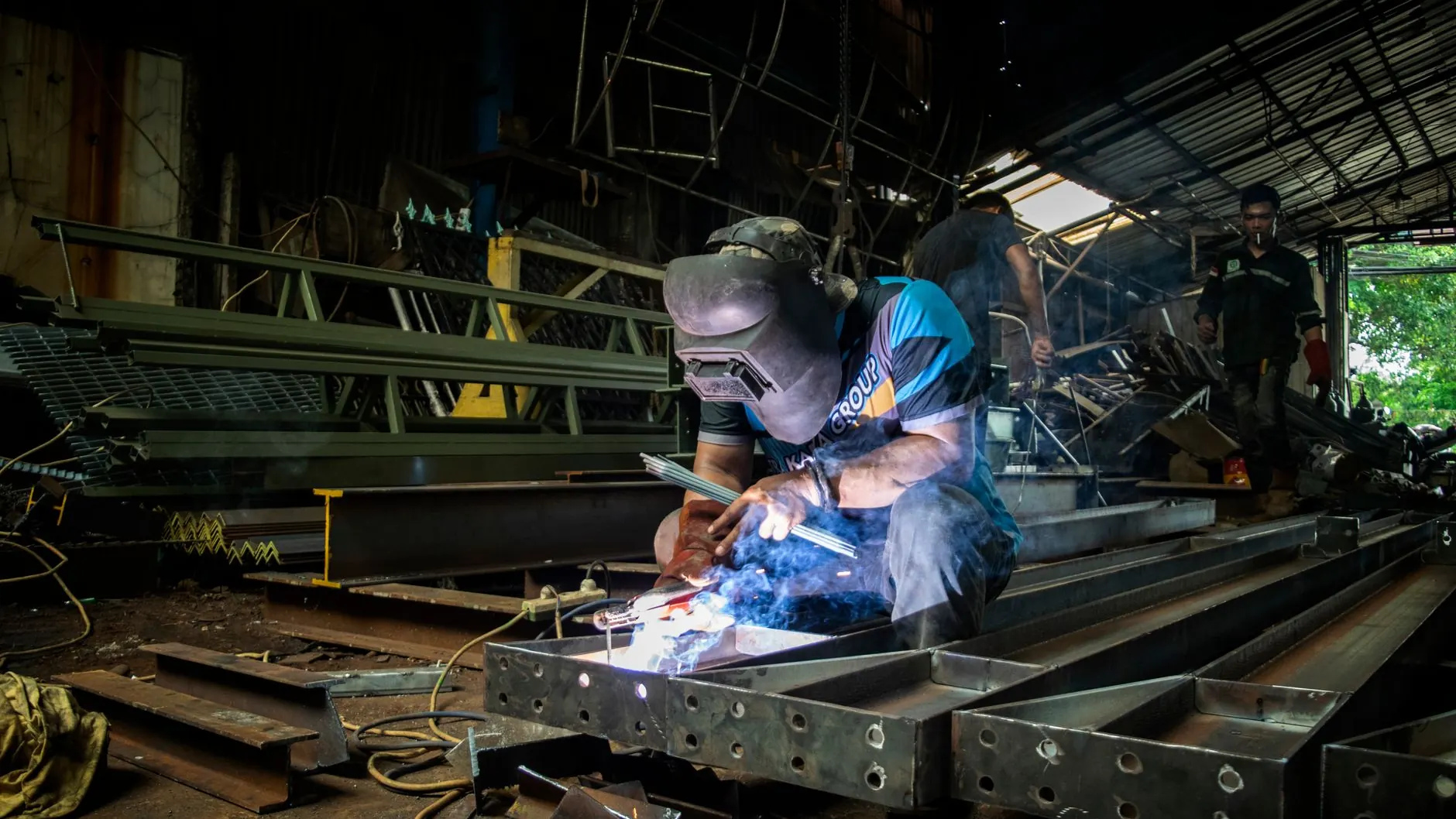
A one-off metal part gets made by turning your idea, sketch, or broken original into real dimensions, matching the right metal, cutting and shaping the pieces, then welding them into a finished part that fits where the old one went. At Albert's Specialty Welding in Irvington, most custom jobs start with nothing more than a photo, a hand-drawn sketch, or the busted original laid on the bench. From there Rod measures, picks the material, and builds it — the same process whether it is a bracket for a Spring Hill homeowner or a machine guard for a shop near the Port of Mobile.
What counts as a custom fabricated part?
Welding and fabrication just means the part does not exist on a shelf. Maybe it was discontinued, maybe the original was welded up wrong from the factory, or maybe nobody ever made the thing you need in the first place. Around Mobile County we fabricate replacement one-offs constantly: trailer crossmembers, gate hardware, equipment brackets, railing sections, stair stringers, hitch mounts, and machine parts that snapped under load. If it is metal and it has to fit something specific, that is welding and fabrication.
The point of a one-off is precision. A stock part gets you close; a fabricated part gets you exact. That matters most when the piece has to bolt into existing holes, clear a moving assembly, or carry weight without flexing.
How do you make a part from just a sketch?
Here is the honest, unglamorous order of operations:
- Measure the reality, not the drawing. We take real dimensions off the mounting points, the mating part, or the broken original. A tape measure and calipers beat a fancy drawing every time.
- Pick the metal. Aluminum for light and rust-proof, stainless for wet or food-contact spots, cast iron repair for old machinery, The salt in the air off Mobile Bay pushes a lot of jobs toward aluminum or stainless.
- Cut and shape. The stock gets cut to length, holes drilled, edges deburred, bends formed.
- Weld it up. MIG for speed and thickness, TIG for aluminum and stainless where the weld shows, Stick for heavier and dirtier steel work.
- Fit and finish. We test-fit against the real assembly, grind the welds flush, and knock down sharp edges so it installs like it belongs there.
That is the whole trick — no CNC farm, no six-week lead time, just a welder who measures twice.
When is fabrication better than a repair?
Sometimes the smart move is fixing what you have; sometimes it is building new. If a cast bracket cracked once and the metal around it is still sound, an equipment repair weld gets you back running for less money. But if a part has failed twice, was under-built from the start, or is rusted paper-thin, fabricating a heavier replacement is cheaper than repairing the same weak part every season. Not sure which side of that line you are on? That is exactly what a free estimate sorts out.
If you are still deciding whether you even need fabrication versus a straight repair, our guide on whether you need a welder or a fabricator breaks down the difference in plain terms.
What kinds of one-off parts do people order around Mobile County?
Every corner of the county sends a different kind of job. Downtown Mobile storefronts and Midtown rentals ask for custom gate frames and window security bars. Shops along the Airport Blvd corridor need machine guards and conveyor brackets. Out toward Theodore and the Fowl River waterfront, it is boat-trailer parts and dock hardware. West Mobile homeowners want mailbox posts, fence brackets, and grill-cart frames. Because Rod runs portable welding out of the Irvington shop, a lot of these get built at the bench and installed on-site, or welded right where the part lives if it is too big to move.
If your job is in town, you can see everything we cover for welding and fabrication in Mobile or browse the full Mobile service area page.
What should I bring or send to get started?
Three things make a fabrication job go fast:
- The broken part, if you have it — even in pieces.
- Measurements or a photo with a ruler or tape in the frame so we can scale it.
- What it has to do — how much weight, whether it gets wet, whether it has to match something.
You do not need engineering drawings, part numbers, or fancy terminology. "It goes here, it broke there, it holds this" is enough to start.
How long does a one-off part take to make?
Honest answer: it depends on the part, but most small one-offs are a same-visit or few-day turnaround once we have the metal and the measurements in hand. A single bracket or a replacement hitch mount can be built at the bench in a couple of hours. A full assembly with several welded sub-parts, a decorative element, or a finish coat takes longer because each step — cut, fit, weld, grind, paint — has to be checked before the next one. What we will never do is rush a weld to hit a clock; a part that fails because it was hurried is not a part, it is a callback. We work standard 8–5 weekday hours, so we schedule the build for a real time slot and give you a straight timeline in the free estimate.
Two things speed a job up: bringing the broken original so we are not guessing at dimensions, and telling us the load and environment up front so we pick the right metal the first time. A part headed for a damp spot near Mobile Bay gets built in aluminum or stainless from the start, which saves a re-do later. If you want the plain-language rundown on scheduling, hours, and what a visit looks like, our guide on booking a welder in Mobile County covers it.
What one-off jobs surprise people?
The parts people assume "can't be fixed" are often the easiest. A cast piece that snapped, a discontinued bracket for an old machine, a weird mounting plate that no store sells — those are bread-and-butter fabrication. We have built everything from grill-cart frames for West Mobile backyards to conveyor guards for shops off the Airport Blvd corridor to custom trailer parts for haulers running the Hwy 90 corridor near downtown Mobile. The common thread is that none of it came off a shelf.
That is the whole spirit of the shop: no job too odd. If you are staring at a broken metal thing wondering whether anyone can help, the answer is almost always yes. And when the smarter path is a straight repair instead of a new build, we say so — the recommendation follows the metal, not the invoice. You can see how on-site work fits in on the portable welding page, or browse local coverage across the Theodore service area.
Ready to get your one-off part made?
Whether it is a single bracket or a full custom assembly, Albert's Specialty Welding builds it to fit. We are fully portable across Mobile County, work aluminum, stainless and cast iron, and there is no job too odd. Call Rod at (251) 753-7337 or reach us through the contact page for a free estimate. Shop work carries a ****, and we are open 8–5 Monday through Friday from our shop at 9641 Two Mile Rd. in Irvington.