
Stair Railing and Handrail Repair: Heights, Materials and Iron Options
A Mobile County guide to stair railings and handrails — typical code heights, aluminum vs. iron materials, and custom options built to fit your home. Free estimates.
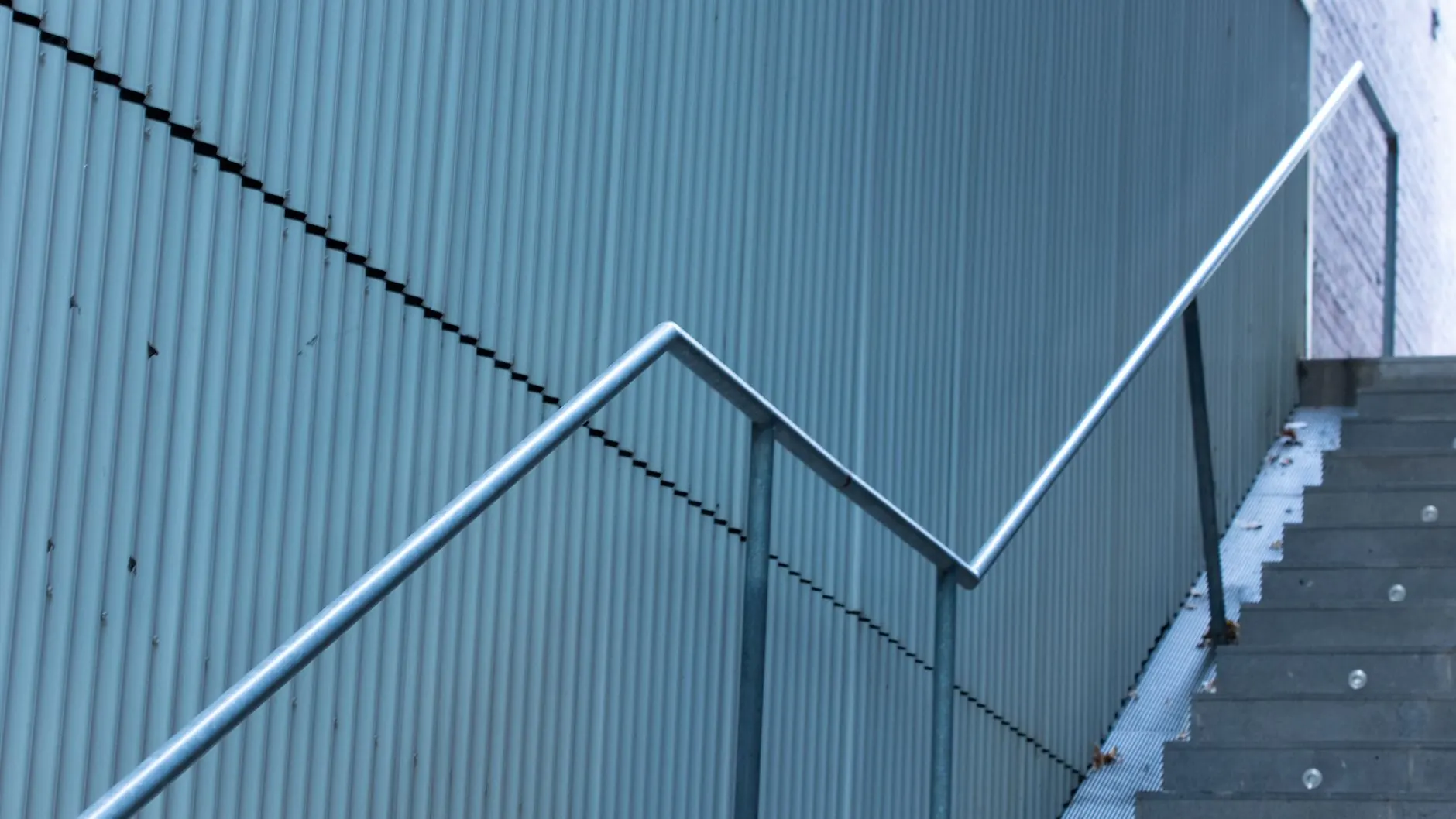
Stair handrails are commonly mounted around 34 to 38 inches above the stair nosing, guardrails on landings and elevated areas are typically taller, and both are worth getting right because they are what keeps people safe on the stairs — but the final word always belongs to your local building inspector, so treat any height figure as general public guidance to confirm for your project, not a promise. Beyond the numbers, the real decisions are material and style: aluminum for low-maintenance coastal durability, or ornamental work for a heavier traditional look.
What are the typical handrail and guardrail heights?
As widely published building-code guidance, graspable stair handrails are usually set somewhere in the neighborhood of 34 to 38 inches measured vertically from the leading edge of the stair treads, so a hand naturally falls to them as you climb or descend. Guardrails — the barriers along an open landing, deck, or balcony edge — are generally required taller to prevent falls, and stairs with an open side often need both a handrail to grip and a guardrail for protection.
Two honest caveats. First, these are general public figures, and requirements vary by application (residential vs. commercial) and by the year of code your jurisdiction enforces. Second, your local inspector has the final say — we always tell homeowners to confirm the exact requirement before we weld, so your handrail or railing lands right the first time. We fabricate to the dimensions you and your inspector confirm.
Handrail or guardrail — which do I actually need?
They do different jobs. A handrail is the graspable rail you hold going up and down — it is about grip and balance, mounted at hand height along the stairs. A guardrail is the taller barrier that stops a person from falling off an elevated surface like a landing, porch, or balcony. Many staircases need both: a guardrail along the open edge with a graspable handrail mounted on top or alongside. When you describe your stairs — interior, exterior, how many steps, open side or against a wall — we will lay out what your setup calls for and build each piece to fit.
Aluminum or ornamental work — what holds up on the coast?
This is the same durability question that drives our fence and gate work near the water. Aluminum resists corrosion and needs little upkeep, which makes it a strong pick anywhere the salt air reaches — from Downtown Mobile porches to the barrier-island steps out on Dauphin Island. Ornamental work delivers that classic, heavy, scrolled look you see on the historic homes around Midtown and old Spring Hill — beautiful, but it wants diligent coating maintenance this close to Mobile Bay or the rust will find it. Our ornamental work work is where the formal look lives; our aluminum vs. stainless vs. cast iron guide walks through the same trade-off in more depth. We also work stainless steel where a bright, modern, ultra-corrosion-resistant rail is the goal.
What custom railing options can you build?
Because we fabricate the replacement rather than hunt for a catalog part, the repair matches what is already there. We handle:
- Simple graspable handrails for a few porch or interior steps.
- Full stair railings with pickets or balusters, plain or ornamental.
- Guardrails for landings, porches, decks, and balconies.
- Grab bars and safety rails for accessibility, mounted solid.
- Ornamental and custom scrollwork to match a home's era or a design you love.
Bring a photo, a sketch, or just a description, and we will measure your stairs and build a railing that fits — no job too odd. That is core welding and fabrication, and it is how we make a rail look like it was always part of the house. If your existing railing is loose, rusted, or wobbly, we can often re-secure and reinforce it rather than replace it.
Do you install railings across Mobile County?
Yes — we are fully portable out of our Irvington shop on Two Mile Road and cover the whole county. We measure and fit on site from Saraland along Hwy 43 to Tillmans Corner off Rangeline Road to the Theodore stretch of the Hwy 90 corridor. Interior stair rails, exterior porch rails, commercial storefront railings along the Airport Blvd corridor near the Port of Mobile — all in the lane. Grab a handrail cell for your town or see the full Mobile County service page to confirm your area.
Getting a railing that fits and lasts
Two things make a railing right: solid mounting so it never wobbles, and a material that suits the coast. Get the heights confirmed with your inspector, pick aluminum for low maintenance or iron for the traditional look with upkeep in mind, and let us measure and fabricate to your actual stairs rather than forcing a stock part to fit. That is how a rail ends up safe, solid, and good-looking for years.
Ready to add or replace a railing? Call Rod Albert at Albert's Specialty Welding, (251) 753-7337, or reach us through the contact page. We are based at 9641 Two Mile Rd. in Irvington, work 8–5 Monday through Friday, and are fully portable across Mobile County. **Free estimates, ** No job too odd.